Nombre del autor:Uriel Camacho

What Surf Level Do You Really Need for Salina Cruz?

What Surf Level Do You Really Need for Salina Cruz?
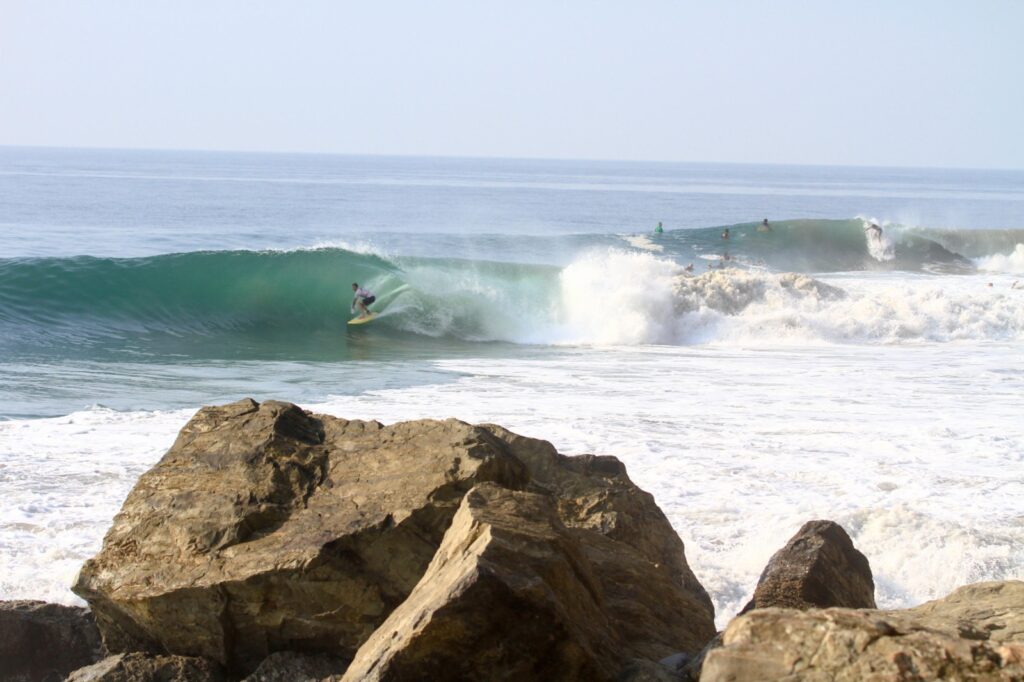
Salina Cruz surf level at a hollow right-hand wave in Oaxaca

Understanding the Salina Cruz surf level required for a trip here is important because the waves can range from manageable to fast, hollow and powerful.

Surfing in Salina Cruz has a reputation for quality waves, long right-hand points and powerful surf.

That reputation is real.
But one of the questions we hear most often at LunaCoral is simple:

The Salina Cruz surf level required depends less on labels and more on whether you can surf independently and handle changing conditions.

What surf level do I really need to come here?

The answer is also simple.
You do not need to be an expert.

But you do need to be able to surf independently.

Salina Cruz Surf Level: You Should Be Able to Catch Waves on Your Own

For us, an advanced beginner surfer is welcome if they can already paddle, stand up on the board by themselves and catch waves without being pushed into them.

Knowing how to duck dive helps a lot, especially when conditions have more power.

Basic turns and some control of the board are also useful, but the most important thing is independence.

If you can paddle into waves by yourself, stand up consistently and manage your board in the water, we can usually work with that.

Salina Cruz has different kinds of waves, and not every session needs to be at the heaviest point break.

Your Home Break Does Not Always Tell Us Your Real Level

One mistake we see sometimes is surfers arriving with an idea of their level based only on how they surf at home.

The problem is that waves are different.

Some surfers come from softer, slower waves where there is more time to stand up, set the rail and make decisions.

Then they arrive here and find faster, hollower waves with more power and a stronger lip.

That changes everything.

It does not mean they cannot surf. The Salina Cruz surf level required can feel very different when the waves are faster, hollower and more powerful than what someone is used to at home.

It just means the same level does not always translate exactly from one type of wave to another.

You can look very comfortable in soft waves and feel completely different the first time you paddle into a fast, hollow right-hand point.

That is normal.

Small and Medium Swells Are Great for Intermediate Surfers

For intermediate surfers, small and medium swells can be some of the most enjoyable conditions in Salina Cruz.

There is still speed, shape and quality, but the waves are more manageable.

You can work on positioning, turns, timing and confidence without feeling like every wave is demanding everything from you.

When the swell gets solid, the situation changes.

The more powerful waves require better positioning, faster paddling, stronger duck dives and more confidence under pressure.

That is when surf conditions in Salina Cruz start to demand more experience and better decision-making.

At that point, we adjust where we surf.

One of the advantages of this area is that we have different options for different levels.

If one point is too serious for a guest that day, we look for a place that better matches their surfing.

Some Waves Here Are Serious

There is no single size where every wave in Salina Cruz suddenly becomes difficult.

It depends on the spot.

Some waves are naturally more powerful, hollow and demanding than others.

There are places where you need real experience because the wave is fast, the takeoff is critical and the barrel is part of the wave.

We do not take someone there just because they tell us they are advanced.

We prefer to watch them surf first.

The First Day Tells Us a Lot

When someone arrives at LunaCoral and we have never surfed with them before, we normally start at a more manageable wave.

Punta Conejo can be a good example depending on the conditions.

We watch how the surfer paddles, positions themselves, takes off, controls the board and reacts when things do not go perfectly.

From there, we have a much better idea of where to take them.

That is one of the biggest advantages of local surf guiding in Salina Cruz: matching the surfer to the right wave, not just chasing the biggest swell.

Sometimes a surfer arrives with limited confidence and improves quickly.

By the third, fourth or fifth day, they are reading the waves better, paddling stronger and making better decisions.

When that happens, we can gradually introduce them to more demanding waves.

The ocean decides the conditions.

We decide which wave makes sense for the surfer.

Advanced Surfers Have More Options

For an advanced surfer, naturally, more of the coastline opens up.

Stronger point breaks, faster waves, hollow sections and heavier conditions become realistic options.

Some of the Salina Cruz point breaks are at their best when the surfer has the experience to handle that speed and power.

For surfers with less experience, we simply choose something more appropriate.
There is no reason to put someone in a wave that is beyond their level.

The goal is not to prove anything.

The goal is to surf good waves and enjoy the trip.

What Boards Should You Bring?

For Salina Cruz, we generally recommend three types of boards.

Your daily surfboard.

This is the board you know best and will probably use most often.

A fish.

A fish is useful when the waves are smaller, softer or when you simply want more speed and fun.

A step-up or gun.

When the swell becomes more powerful, having extra length and paddle power can make a big difference.

You do not need a huge quiver.

But having these three options gives you enough range for most conditions we see here.

When Should You Wait Before Coming?

If you are still learning how to stand up consistently, Salina Cruz is probably not the right trip yet.

If you catch one wave and fall on the next four, struggle to paddle efficiently or are not comfortable getting through breaking waves, it is better to train a little more first.

Get more water time.

Improve your paddling.

Learn to control your board.

Become more comfortable with duck diving and swimming.

Then come.

The waves will still be here.

You Do Not Need to Be an Expert?

The idea that Salina Cruz is only for expert surfers is not true.

But it is also not a place where we recommend learning the basics from zero.

If you can surf independently, we can usually find waves that fit your level.

Your Salina Cruz surf level can also change during the week as you adjust to faster, hollower and more powerful waves.

That is what makes a Salina Cruz surf trip work best — choosing the right conditions, the right wave and the right pace for each surfer.

And once you are here, your surfing may change during the week.

That is part of the experience.

At LunaCoral, we do not decide where to surf from an app alone.

We look at the swell, wind, tide, the different spots and, just as importantly, the surfer standing in front of us.

That is how we choose the day.

Not every surfer needs the same wave.

And not every good wave is the right wave for every surfer.

Come ready to surf on your own. We will take care of helping you find the right place to do it.
Explore our Salina Cruz surf experiences.

Salina Cruz surf stories by Uriel Camacho at LunaCoral

5 Mistakes Surfers Make Before Booking a Surf Trip to Salina Cruz — and How to Avoid Them

After more than 30 years surfing the coastline of Salina Cruz, I have watched hundreds of surfers arrive here chasing the perfect wave.

Some found it.

Others spent half their vacation making mistakes that could have been avoided before they even booked the trip.

Most of those mistakes had nothing to do with surfing ability. They came from choosing the wrong accommodation, joining the wrong group, trusting the forecast too much, or expecting Salina Cruz to work like an ordinary surf destination.

If you are planning your first Salina Cruz surf trip, these are five things I believe every surfer should understand before getting on the plane.

1. Thinking Salina Cruz Is Just One Famous Wave

People often think they are booking a trip to surf one famous point break.

They are actually booking access to an entire coastline.

Punta Conejo can be considered either the first point of this part of Mexico or the last one, depending on the direction from which you look at it. From there, a long chain of right-hand point breaks continues through Punta Chivo, La Escondida, Chipehua, La Bamba, Mojón, Toro, Coral and many more, extending toward Barra de la Cruz.

Across roughly 173 kilometers of coastline, there are points with completely different personalities.

Some produce short, playful sections.

Others offer open walls for long turns.

Some create fast, racing barrels.

Others deliver rides so long that your legs begin to burn before the wave finishes.

Most have warm water, sand bottoms and beautiful natural surroundings, without hotels, restaurants or beach clubs blocking the view.

But every point has its day.

Every point has its tide.

Every point has its wind.

And every point has a moment when everything comes together.

After more than three decades surfing here, I have learned that the secret is not simply finding a good wave.

The secret is knowing exactly where to be when that wave comes alive.

That is why we do not wake up with a fixed destination every morning. We study the swell, tide, weather and local conditions before deciding where to surf.

We are not asking:

“Where are we going today?”

We are asking:

“Which wave is ready today?”

When you arrive at the right point, at the right tide, with the right wind, incredible things can happen.

When the Forecast Gets It Wrong

The rainy season is a perfect example of why local knowledge matters.

During this time of year, wind forecasts can become confusing. A storm may arrive, the sky turns dark and the wind appears to destroy the conditions.

People begin packing their boards.

Vehicles leave.

Everyone assumes the session is over.

I often stay inside the truck and wait.

Ten minutes.
Sometimes fifteen.

Then — boom.

The storm moves away and the wind swings from east to northwest. That northwest wind can be epic, and it is something we often experience during the rainy season.

The ocean suddenly cleans up.

The wave turns offshore.

The magic appears.

And sometimes there is nobody left in the water except us.

An app can show you a forecast.

It cannot always tell you when to wait fifteen more minutes.


2. Staying in Salina Cruz City

This is one of the most common mistakes I see every season.

Many surfers book a hotel in Salina Cruz city because it appears convenient, offers more restaurants or looks cheaper online.

But a surf trip is not an ordinary vacation.

Where you stay becomes part of your surf strategy.That matters even more on a Salina Cruz surf trip.

Staying in the city can mean spending hours inside a vehicle every day. You may leave before sunrise, drive to the point breaks, return after the morning session and repeat the same journey later if the afternoon conditions improve.

By the end of the week, those hours add up.

That is time you could have spent:

• Surfing
• Resting and recovering
• Reviewing your footage
• Eating properly
• Relaxing with your group
• Preparing for the next session

Instead of drinking coffee near the ocean and checking the morning conditions, you may still be driving.

Instead of reaching the lineup before the wind changes, you may arrive after the best window has already passed.

Instead of returning home quickly after an exhausting session, you face another long ride back to town.

At LunaCoral, we are located just minutes from Punta Conejo and Punta Chivo, two of the best-known point breaks in the region.

That means less time driving and more time living the reason you came here:

Surfing Salina Cruz.
Accommodation is not only about having a bed.

It affects how early you arrive, how quickly you can react to changing conditions, how well you recover and how much energy you have for the next session.

The best surf trips are not measured by kilometers driven.

They are measured by hours spent in the water.

A Salina Cruz surf trip is shaped by all of those decisions.

3. Sharing a Vehicle With Surfers Who Want a Completely Different Trip

Many surfers do not think about the group until they are already here.

Sharing a surf vehicle sounds simple, but mixing surfers with completely different levels and goals can affect everyone’s experience.

Imagine that you are an advanced surfer looking for barrels, but most of the group is surfing point breaks for the first time.

Or imagine the opposite.

You are an intermediate surfer trying to build confidence, but everyone else wants to paddle into the heaviest wave available.

Nobody is wrong.
They simply need different waves.

The advanced surfer may spend the morning waiting at a soft wave that does not challenge them. The intermediate surfer may feel pressured to surf conditions beyond their ability.

Someone is always compromising.

The group may also disagree about when to leave, whether to surf a second spot or how far to drive to find better conditions.

That is why LunaCoral is intentionally limited to a small number of surfers and why understanding the level and expectations of every guest matters before the trip begins.

Our experiences are designed for advanced beginners who already catch waves independently, intermediate surfers and advanced surfers — not complete beginners.

A well-matched group means:

• Less waiting
• Better wave choices
• More productive sessions
• Similar expectations
• A more natural rhythm throughout the week

Your surf partners influence your vacation almost as much as the waves themselves.

Choose them carefully

4. Assuming Every Surf Camp Will Chase the Best Wave

Not every surf operation works the same way.

Some camps take everyone to the closest or most crowded point because it is easier, faster and uses less fuel.

There may be a decent wave there.

But the epic moment could be three points farther west with nobody surfing it.

We go.

Our philosophy is simple:

If the best wave is farther away, that is where we want to be.

Of course, this does not mean making reckless decisions or promising something the ocean cannot deliver. It means remaining flexible, using a capable vehicle and being willing to search when the conditions justify it.

Sometimes the road is easy.

Sometimes it is not.

There Is a Fifty-Fifty Chance We Will Make It

There is a wave I sometimes suggest checking during the rainy season.

The wave can be incredible, but accessing it may require crossing a flooded mangrove filled with deep mud and mosquitoes.

Before going, I always tell the guests the truth:

“There is a fifty-fifty chance we will make it.”

If they want a simple day, we choose another point.

But if they want a real adventure, we go together.

I explain the deal clearly: if the vehicle gets stuck, everybody works. We get out, step into the mud, push the truck and help each other.

Sometimes we cross successfully and find an epic point break with nobody else around.

Other times, the mangrove wins.

I have had to walk to the next village looking for a tractor. Three different times, a tractor has pulled my vehicle out of the mud.

We have returned to LunaCoral at midnight or one in the morning — exhausted, covered in mud and destroyed by mosquitoes.

During the struggle, people sometimes wonder why they agreed to come.

At the end of the trip, they tell me:

“Uriel, that was one of the greatest adventures of my life.”

They remember the work.

They remember the laughter.

They remember the tractor.

But most of all, they remember the waves we surfed when we made it through.

This type of experience is not for everyone, and I will never force a guest to take that risk.

But for surfers who want a genuine adventure, this is part of the real Oaxaca.

The best waves do not come with paved parking lots

.

5. Choosing a Guide Who Only Knows the Forecast

Forecasts are useful.

I check them too.

But they only tell part of the story.

Before smartphones, surf applications and live cameras, we learned the waves by spending thousands of hours watching the ocean.

We learned by arriving too early.

By arriving too late.

By surfing the wrong tide.

By noticing what happened after a storm.

By understanding how one point responded differently from another to the same swell.

Even after more than 30 years, I still check the conditions personally every morning because this coastline never stops teaching me.

That same coastline is also part of a broader effort to protect surf ecosystems and coastal communities through organizations such as Save The Waves Coalition.

A small change in wind direction can transform the day.

A tide can open or close the barrel.

A point that looked average yesterday may become perfect today.

A famous break may be crowded while another point farther along the coast is empty and firing.

A local surf guide should do more than drive.

They should understand:

• How each point reacts to swell direction
• Which tide creates the best shape
• When the wind is likely to change
• Where the safest entry and exit points are
• When to wait
• When to move
• When to stay exactly where you are

The value is not simply knowing where waves exist.

The value is knowing which wave will offer the best opportunity at that exact moment.

A Surf Trip Is More Than the Surf

You are coming to Salina Cruz for waves.

That is the truth.

But after hosting surfers from around the world for more than twenty years, I have learned that the memories people carry home are not limited to the lineup.

They remember the coffee before dawn patrol.

The truck rides.

The jokes after someone gets the barrel of their life.

The homemade Oaxacan meals.

The evening video sessions.

The pool after a long day in the ocean.

The sunrise boat trip.

Catching a fish, surfing a remote point and eating that same fish for dinner during our Fish. Surf. Feast. experience.

They remember arriving as strangers and leaving as friends.

That is why LunaCoral is not designed as a hotel.

It is a home built around surfing.

A normal day is simple:

Wake up before sunrise.
Drink coffee.
Check the ocean.
Surf.
Eat.
Rest.
Surf again.
Share dinner.
Watch the day’s footage.
Sleep.
Repeat.

No unnecessary luxury.

No tourist performance.

Just world-class waves, authentic hospitality and a small group of people living around the rhythm of the ocean.

Final Thoughts on Your Salina Cruz Surf Trip

Every season, surfers tell me they wish they had visited sooner.

Places like this are becoming harder to find.

Warm water.

Sand-bottom right-hand point breaks.

Long rides.

Natural landscapes.

Small groups.

Authentic local knowledge.

But the quality of your trip will depend on more than the swell forecast.

Choose where you stay.

Choose the people you will share the vehicle with.

Choose a guide who understands the coastline beyond an application.

Choose an experience that matches the type of surfer — and traveler — you really are.

If you are looking for a polished resort, there are plenty of options in the world.

If you are looking for an authentic surf adventure led by someone who has spent more than thirty years exploring this coastline, I would be proud to show you my home.

See you in the lineup.

— Uriel Camacho

Ready to Experience Salina Cruz With Local Knowledge?

Explore our surf experiences and choose the trip that matches your level, goals and the kind of week you want to have.

Scroll al inicio